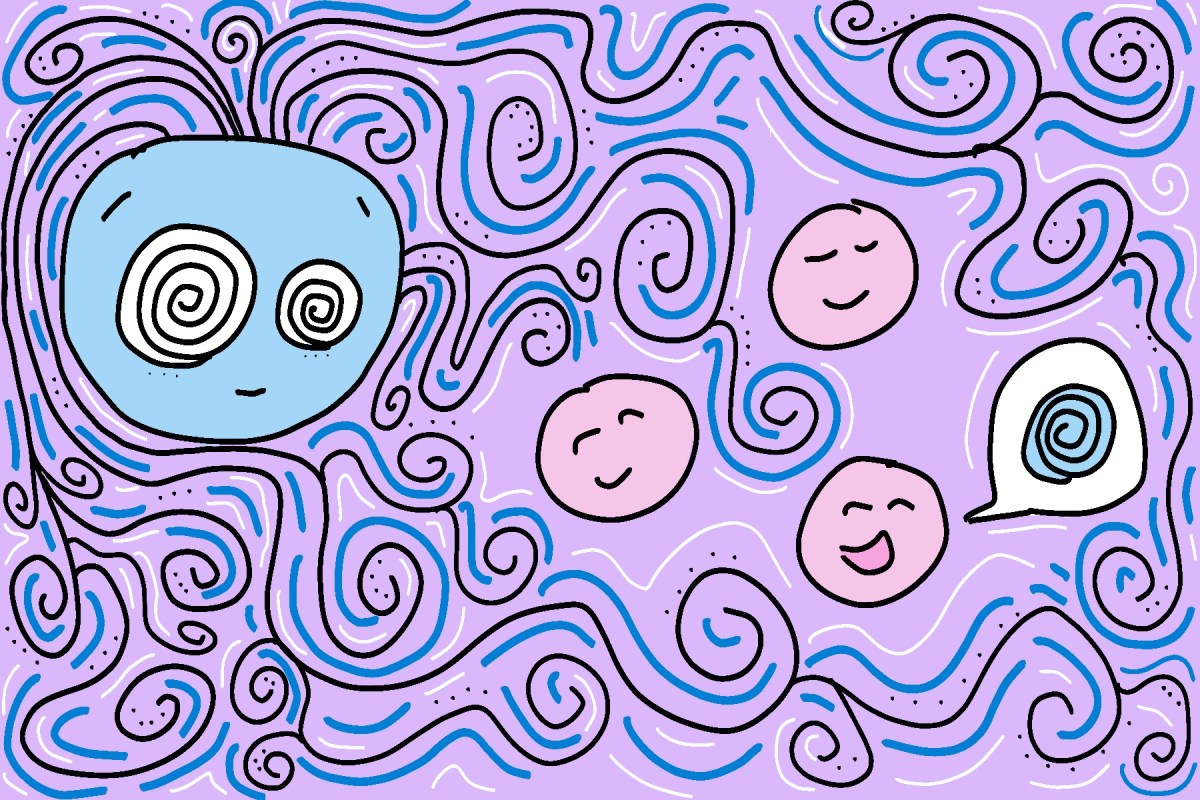
What other people had told me I was, I’d become.
We’d just gotten home from a Super Bowl party at a family friend’s when I overheard my older sister saying to my mom that I had ‘no social skills’, to which my mother replied she ‘was thinking the same thing!’. I was 12. At the time I was livid (had a bad temper, still do). My sister said what she did because she was in high school, I was in middle school, so we naturally didn’t get along. We’d had a petty spat in front of others at the party. Why my mother agreed with her is probably a different issue. Whatever their motives, I still remember these thoughtless comments more than a decade later, and they’ve impacted my social skills since. It was at that moment that I became self-aware there was something wrong with me, and apparently I didn’t know how to socialize like everyone else. My family had known this fact about who I was, I thought, when it had been unbeknownst to me, and I needed to make sure no one else found out.
In high school I had a group of friends who functioned effectively by being mean to each other, where every other comment was a passive aggressive put-down, always made in a ‘joking’ manner so everyone laughed and you were meant to have your own come-back. The comments about ugly shoes, the way I ran at soccer practice or a bad haircut, I handled just fine. But when I once said something which I hadn’t considered to be controversial in any way and my friend said I was ‘so fucking weird’, I secretly imploded. She probably didn’t mean much by it really, but for me, there was no comeback, it was a KO to my self-esteem.
She’d discovered my secret, the secret that I don’t know how to socialize, that actually I don’t belong. I didn’t understand what was wrong with what I’d said, which made it all the harder, as I had no defense against not doing it again. Ugly shoes? Don’t wear them again. Funny running? Don’t swing your arms like that. Bad hair? Grow it out. But being weird? How was I supposed to fix that?
The weird comments became a common theme for me, and each time they made my stomach drop, as if I were on a roller coaster. Because I could never figure out what was weird about what I’d said, I never knew when the comments were coming, and I lived in fear of saying anything at all. My friends thought I had no social skills, my family thought it too, so it must be true. I lacked something everyone else had been born with, and I couldn’t see a way to fix myself.
Don’t get me wrong, throughout my adolescence, I had plenty of friends. I wasn’t unpopular and people talked to me in the halls at school. I was on the soccer team. I always had a date for dances. But I felt like I was hiding this secret. Don’t let anyone know you’re weird. Don’t let on that you have no social skills. Don’t scare them away. This evolved into both a) not making many new friends because I didn’t know how to read them to anticipate what they’d label as ‘weird’ and b) acting so over-the-top strange/funny that none of my friends would take what I was saying seriously, and if I said something ‘weird’ on accident, they’d think I was just joking. My whole life became a tiring act.
Over the years this fear of being misunderstood developed into a social anxiety which in my early 20s became fairly severe. At a time in my life when I should have been meeting new people, exploring the world, exploring myself, I didn’t want to see anyone. I was scared of forming deeper relationships because they might discover my secret. The more time I spent with someone, the greater the probability that I’d say something weird by accident. I didn’t know how to behave, I told myself, and I had to fully concentrate on every interaction to make sure each word coming out of my mouth was tailored to be normal.
I became hyper-sensitized to any change in someone’s expression, trying to read if the last thing I’d said had made them change their mind about me. Any frown, any squint of their eyes that made it seem like they didn’t understand, made me recoil. I’d try to cover up whatever I’d done that was odd with something more normal, something more relatable, something more bland. My heart rate would jump at the slightest inkling that my act wasn’t working, and I’d say things that didn’t make sense or things I didn’t really believe. I was constantly putting on a show.
So intent on pleasing people, on not messing up, I’d come home from any social activity (which wasn’t very many at this point) and feel utterly exhausted. It was better, I figured, to avoid these situations whenever I could. Thinking about going out of the house and talking to people made my skin crawl, my stomach would drop: I was on that same roller coaster that I was used to every time I was forced into a social situation. I’ve always hated roller coasters and I don’t ride them. This ended up being a very sad and lonely time in my life.
To be clear, I am a self-acknowledged introvert. I get energy from being alone, and spending time with others, even close friends, takes a lot from me. But being alone all the time, not being able to make any connections with other human beings takes a toll too. We need connection with others to enrich our lives and I wanted to have new experiences! Being alone all the time was not what I had planned for my twenties, but it was easier. If I was alone, no one would know I was weird.
As I got older, I moved to bigger, further-away-from-home cities and began to meet people like me (the meeting usually happened by proximity, not by choice). People who understood my jokes, who didn’t blink an eye at something my other ‘friends’ would label weird. I made deeper connections. I actually wanted to see people and get to know them better. A lot of personal work went into this, of course, as those old comments were still in the back of my head (and likely always will be), but over time, the more I pushed myself, the happier I became. The more I stopped worrying about keeping my secret, the more comfortable I felt. The more socially capable I felt. And then I had a realization.
What other people had told me I was, I’d become. I wasn’t by nature socially inept. I wasn’t born weird. I was just me. I said things that some people didn’t understand. I said things that some people didn’t like. But because I’d been told I was socially handicapped, I became socially handicapped. I’d told myself this story about who I was, and I worked hard to play the part. Instead of being myself and finding people who got me, I limited myself to being ‘normal’. But because being ‘normal’, contorting myself into this bland box, took so much work for me, it came off as unnatural and people could probably feel it. It made them feel awkward. It made me feel awkward! Because it was! Because I wasn’t being myself and it was taking a lot of strained, awkward energy.
What I realized is that I needed to stop censoring myself, trying to hide my ‘weirdness’, and instead say what I felt like saying. If someone understood me we could connect. If they didn’t get me, that would be fine too: we might just be different types of people. Just because the pool of people that I connect with might be smaller than it is for others, doesn’t mean that I should bar myself from society. If I don’t get along with someone, then so be it. If they don’t like me, that’s fine. We can both move on and find better fits, and it’s not because of me. It’s not my fault. It never was my fault. I’m not lacking.
This realization helped my fear of meeting new people, my fear of spending time with and getting to know them, letting them get to know me. It’s given me the confidence to reach out to acquaintances to grab a coffee. When I’m with other people, I don’t feel as awkward because I don’t have to concentrate on putting on my ‘normal’ show. And, if things don’t work out, I don’t take it personally. I no longer come home and analyze every. single. thing. I said to see if anything might have been wrong (I still analyze some things, but baby steps here).
Of course my social anxiety isn’t gone, and the comments that people made about me when I was younger were never the sole reason for this anxiety. In fact, the reason they probably affected me so much was because I do have social anxiety, and hearing it from other people had made it more of a reality, had made me feel like it was my fault, had made me feel like I needed to hide it. I no longer need to hide, but phone calls are still a no-go unless they’ve been planned days ahead of time. I still get nervous meeting up with new people. I still hate crowds and I still have to plan social activities well in advance so I can mentally prepare. But recognizing the source of some of my social fear has allowed me to make better friends and to have more fun.
Don’t let anyone make you think that you don’t have social skills or that you don’t deserve to connect with others. Social anxiety is surely a burden, but you can’t worry about what other people think about it. Don’t shut yourself out from the world – we all need human connection, even introverts. Everyone has social skills, even me, though these skills may manifest differently for different people. Don’t edit yourself just to make people like you. Stop hiding. And also try not to make friends with people who make you feel bad for being the way that you are. It’s not you, it’s us. You’re not weird.
 It's not you, co.